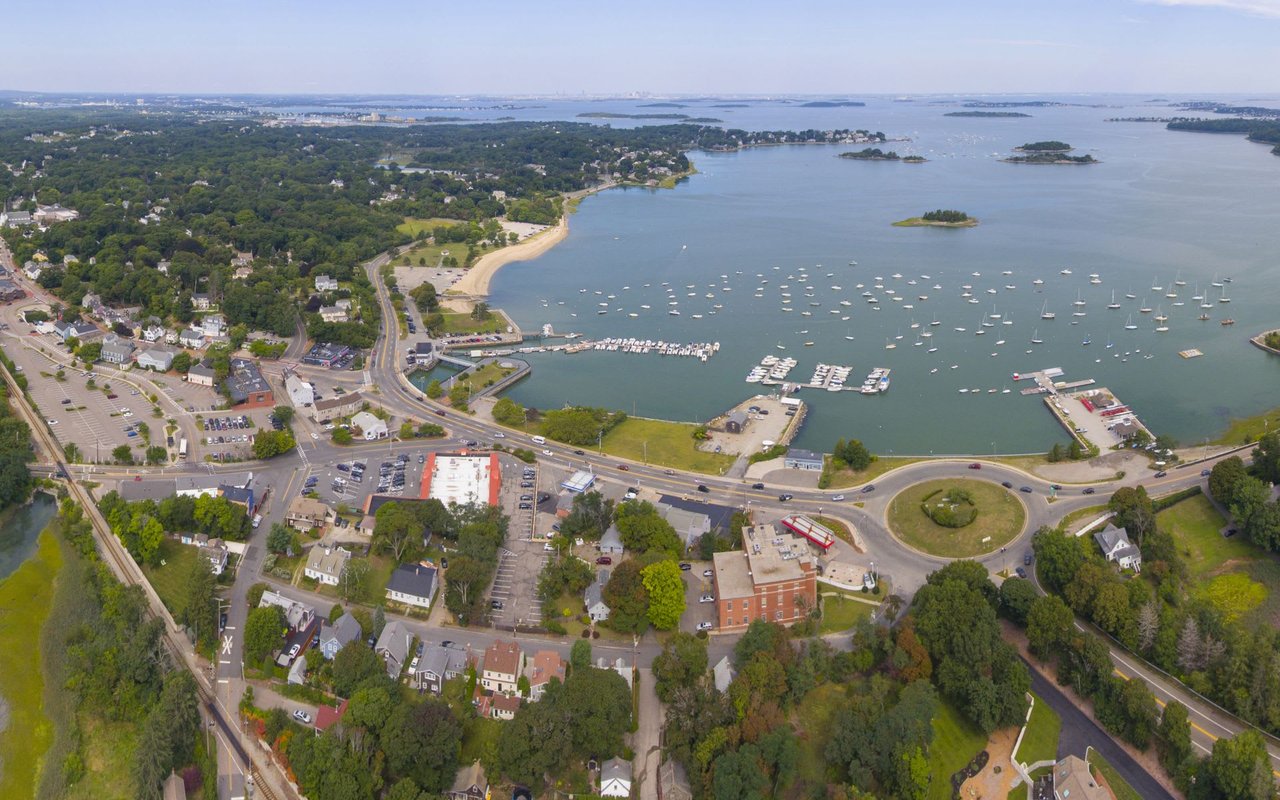
If you are thinking about living in Hingham and working in Boston, the ferry is probably one of the first things you want to picture clearly. Is it practical every day, or is it more of a nice extra when the weather is perfect? The answer is that for many riders, it can be both a real commute option and a lifestyle perk. Here is what you can expect from a Hingham ferry commute and how it may shape your day-to-day life.
Ferry Routes From Hingham
Hingham is served by two commuter ferry patterns, and that matters when you are deciding how a trip into Boston will actually feel. The F1 route runs directly between Hingham and Rowes Wharf, while the F2H route runs between Hingham, Hull, Logan Airport, and Long Wharf North.
If you want the most straightforward ride, the direct Hingham service to Rowes Wharf is the simpler option. If you like having access to Long Wharf North and nearby transit connections, the Hingham, Hull, and Logan pattern can be useful for a broader range of destinations.
What the Commute Feels Like
One of the biggest draws of the ferry is that it does not feel like a typical commute. The MBTA describes it as a way to avoid traffic and enjoy views of Boston Harbor, which is a very different start and end to your day than sitting on a crowded highway.
That harbor setting is a real part of the appeal. For many Hingham buyers, the ferry works as both transportation and a lifestyle amenity, especially if you want coastal living without giving up access to downtown Boston.
Typical Travel Time
Your exact timing depends on the route and whether the boat makes additional stops. On the weekday Hingham timetable, several Hingham-to-Long Wharf trips land in the low-to-mid 40-minute range.
For example, the 5:40 AM departure reaches Long Wharf at 6:23 AM, and the 6:40 AM departure reaches Long Wharf at 7:23 AM. That gives you a good sense of the ride itself, though exact timing can vary when the boat also stops at Hull or Logan Airport.
When Ferries Run
The ferry is a scheduled commute, not an on-demand one. MBTA guidance says service is generally available between 6 AM and 11 PM throughout the week, with more frequent trips during weekday morning and afternoon peak periods.
On weekdays, departures from Hingham begin as early as 5:40 AM and continue into the evening. That can work very well if your schedule lines up with the published timetable, but it does reward a little planning.
Weekday Rhythm
For many commuters, the weekday schedule is the sweet spot. Morning and afternoon peak service is designed around normal workday travel patterns, which makes the ferry feel more practical for regular office trips.
Instead of deciding minute by minute when to leave, you tend to build your routine around a specific departure. For some people, that structure is a plus because it makes the day more predictable.
Weekend and Holiday Differences
Weekend and holiday service looks different from a normal weekday commute. The summer weekend timetable dated May 17, 2025 lists the first Hingham-to-Boston departure at 8:00 AM, which is much later than weekday service.
The MBTA also notes that ferries often run on weekend or modified schedules on major holidays. If you are counting on the boat for work, early meetings, or airport timing, it is smart to check the schedule rather than assume it will run the same way every day.
Boston Arrival Points Matter
Where you arrive in Boston can shape the rest of your trip. Long Wharf North is the dock used for Logan, Hingham, and Hull service, and it places you near the Red, Orange, Blue, and Green lines, along with Silver Line service and South Station-area commuter rail connections.
That makes Long Wharf North helpful if your office is not right on the waterfront. Rowes Wharf, on the other hand, is the direct Hingham dock and can be the easier choice if a direct ride is your priority.
Cost of Commuting by Ferry
Cost is another practical part of the decision. The current MBTA fare page lists the Hingham/Hull Ferry at $9.75 one way for full fare and $4.85 for reduced fare, and children 11 and under ride free.
If you commute regularly, monthly pass pricing may be more relevant than one-way tickets. The listed monthly Hingham/Hull ferry pass options are $329 on CharlieTicket and $319 in mTicket.
Ticket Options
The MBTA says one-way fares can be purchased with:
- mTicket
- paper ferry tickets
- cash
The MBTA recommends buying before boarding and then showing your ticket to a crew member onboard. Since docks and wharfs do not have fare gates, the process is fairly simple once you know what to expect.
Onboard Conveniences
A Hingham ferry commute has a few practical details that can make the ride easier. Bikes are allowed on all ferry boats, which can help if you want flexibility on either side of the trip.
Snacks and drinks are also available for purchase onboard. If you are someone who likes to settle in, have coffee, and ease into the day, that adds to the calm, commuter-friendly feel.
Paper ticket booths are available at Hingham Shipyard, Long Wharf, Rowes Wharf, and Charlestown Navy Yard. The MBTA also notes that schedule printouts are available at the Hingham Intermodal Center, which can be helpful if you prefer having the timetable in hand.
Weather and Seasonal Reality
The ferry is a year-round route, but that does not mean conditions stay the same all year. The MBTA notes that ferry schedules depend on the season, and some summer trips include a seasonal Georges Island stop.
Winter is the bigger factor for commuters. Official Hingham alerts in January and February 2026 reported complete suspension of Hingham ferry service or severe-weather schedules that omitted Hingham entirely, even when other parts of the route were still operating.
Why Checking Alerts Matters
The main lesson is not that the ferry is unreliable. It is that ferry commuting is dependable in a scheduled-transit sense, but still affected by weather, season, and holiday operations.
If you plan to rely on the boat regularly, checking alerts should become part of your routine. That is especially true in winter, when ice and severe weather can change service patterns quickly.
Who Usually Loves This Commute
The ferry tends to be a great fit for people who value a calmer start to the day and do not mind planning around set departures. If you like the idea of avoiding traffic, enjoying harbor views, and arriving in Boston by the waterfront, the experience can be a strong part of Hingham’s appeal.
It is often especially attractive for Boston-area buyers moving to the South Shore who want more space and a coastal setting without feeling cut off from the city. In that way, the commute becomes part of the reason to choose Hingham, not just a logistics question.
The Tradeoff to Understand
The biggest tradeoff is schedule dependence. Compared with driving, the ferry can feel far calmer and more scenic, but it works best if your job and lifestyle give you some flexibility around published departure times.
You also need to be realistic about weather and holiday changes. If you want total spontaneity, the ferry may feel limiting, but if you prefer a more predictable routine, it can be a very appealing option.
Ferry Access and Home Search Strategy
If ferry commuting is part of your home search, it helps to think beyond the ride itself. You will want to consider how your daily routine connects to the dock, how often you expect to be in Boston, and whether direct access to Rowes Wharf or connections from Long Wharf North better match your work pattern.
Hingham also offers more than one way into the city. The town’s transportation information notes both commuter boat service to Rowes Wharf and commuter rail service on the Greenbush Line, which reinforces Hingham’s appeal as a multi-modal South Shore town.
That bigger picture matters when you are comparing neighborhoods, home styles, and day-to-day convenience. Commute patterns often shape how a home feels to live in over time, especially if you are relocating from Boston or making a move within the South Shore.
If you are weighing Hingham because of the ferry and want help thinking through where that lifestyle fits best, Pamela Bates offers the kind of local perspective that can make your decision much clearer.
FAQs
What is the ferry commute from Hingham to Boston like?
- The Hingham ferry commute is scheduled, scenic, and often calmer than driving, with Boston Harbor views and weekday service geared toward morning and afternoon peak travel.
How long is the ferry ride from Hingham to Boston?
- Several weekday Hingham-to-Long Wharf trips are in the low-to-mid 40-minute range, though exact timing can vary depending on stops such as Hull or Logan Airport.
Where does the Hingham ferry arrive in Boston?
- Hingham ferry service arrives at either Rowes Wharf on the direct route or Long Wharf North on the Hingham, Hull, Logan route.
How much does the Hingham ferry cost?
- The MBTA lists the Hingham/Hull Ferry at $9.75 one way full fare, $4.85 reduced fare, and monthly pass options at $329 on CharlieTicket and $319 in mTicket.
Can you buy Hingham ferry tickets before boarding?
- Yes. The MBTA says you can buy one-way fares with mTicket, paper ferry tickets, or cash, and it recommends purchasing before boarding.
Does the Hingham ferry run year-round?
- Yes, the Hingham/Hull route is a year-round service, but schedules can vary by season and may change during severe weather or holidays.
Is the Hingham ferry reliable in winter?
- The route operates year-round, but official Hingham alerts showed that winter ice and severe weather caused suspensions or modified service affecting Hingham in early 2026.
Is Hingham a good choice for Boston commuters?
- Hingham can be a strong option for Boston commuters who want coastal living and access to the city, especially because it offers both commuter ferry and Greenbush Line commuter rail service.